Surfaces and routes
Should a garden path be straight or curved?
By GardenRender AI · Planning ideas and concept comparisons
Use a direct route for a direct journey; explore a curve when it has a reason, such as passing a feature you want to keep. A curve drawn merely to fill an attractive image may make an ordinary trip less convenient.
Draw the journey before its edges
On a copy of your photo, mark the start and destination. Add the actual objects that interrupt the journey. Then describe whether the path is for daily access, a walk around planting or an occasional visit to a seat.
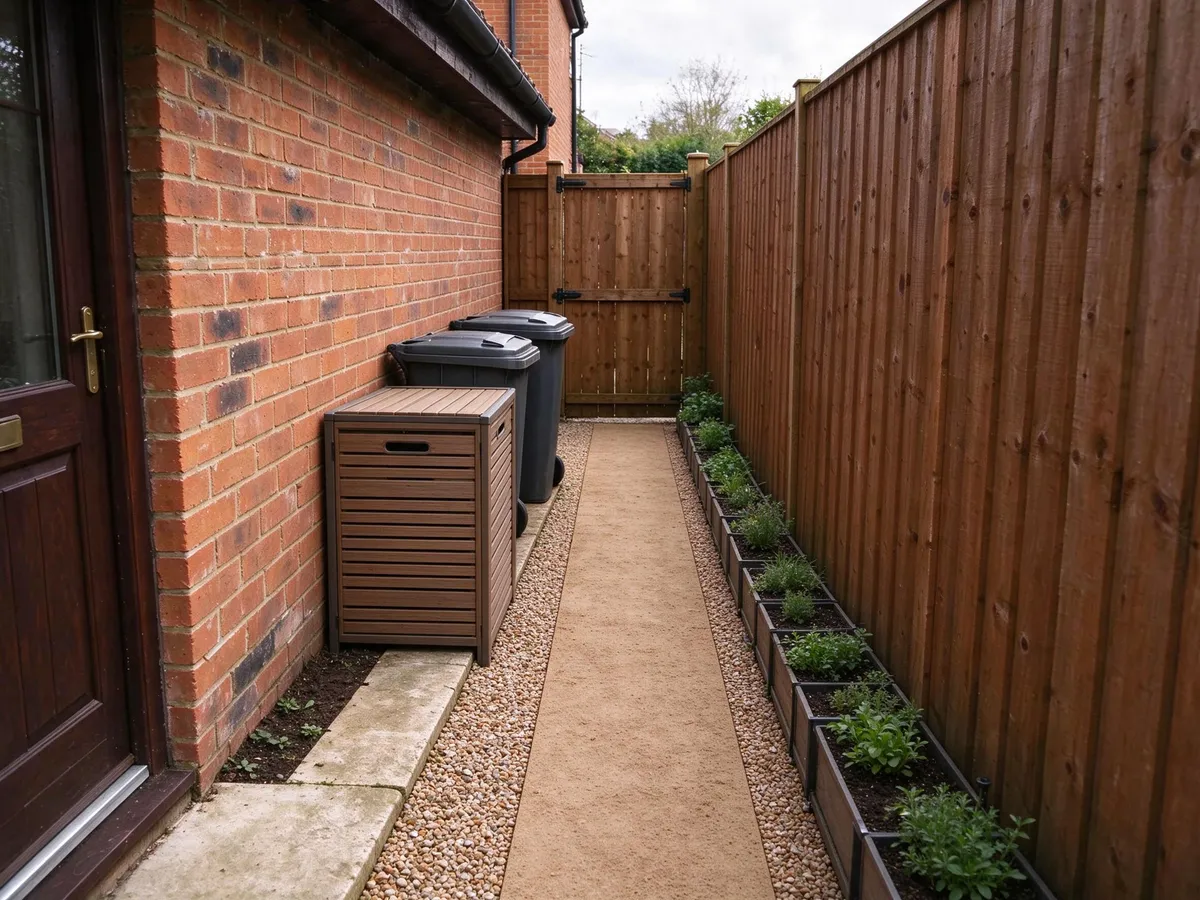
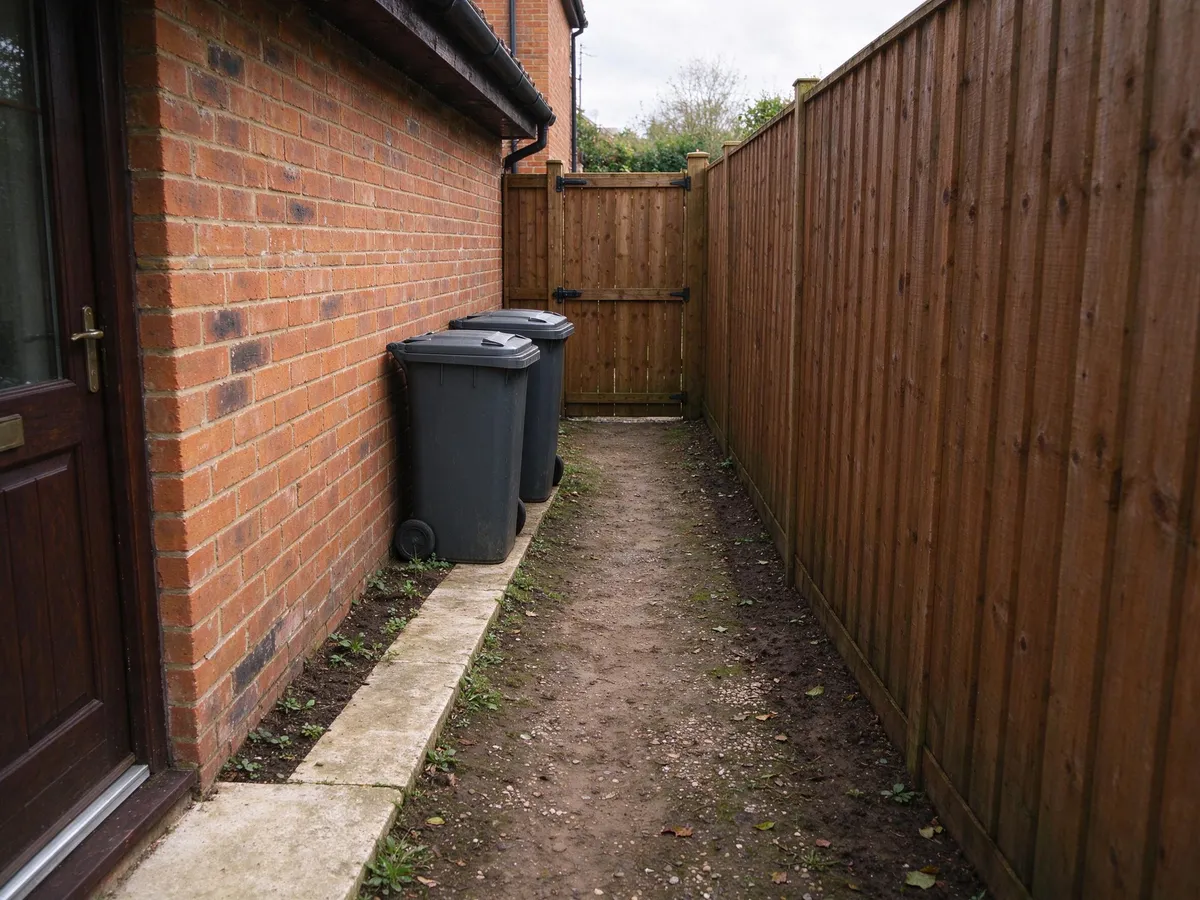
An everyday side passage
Follow the walking strip beside gravel and inspect the modest bin screen.
The change is small. Gate operation, bin access and usable width are not measured; no accessibility certification is implied.
Both images are AI-generated editorial demonstrations, not a customer project or completed landscaping. Generated 2026-11-14. A case may be reused where it answers a different planning question.
The narrow passage keeps an obvious connection towards the gate. Its modest change is useful here: the route remains the subject rather than becoming a decorative sweep.
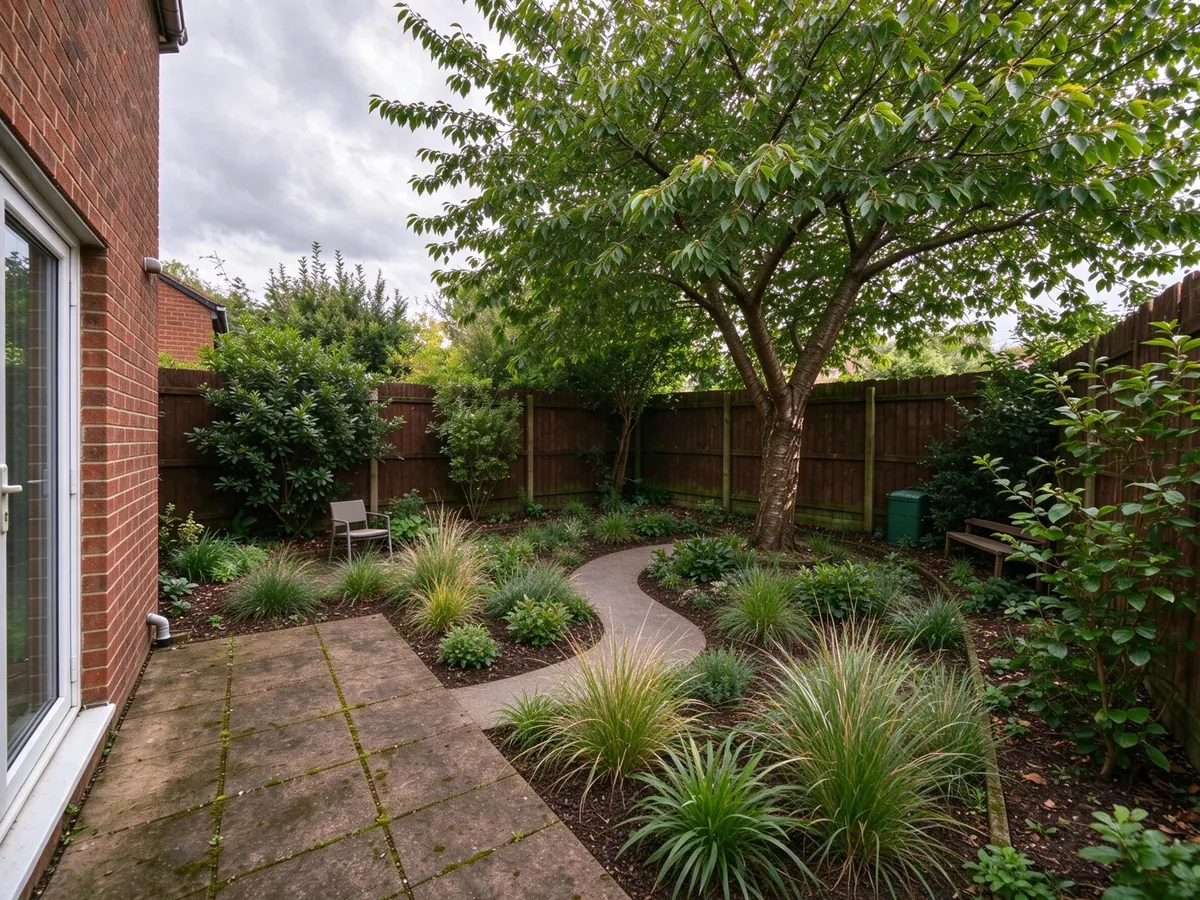
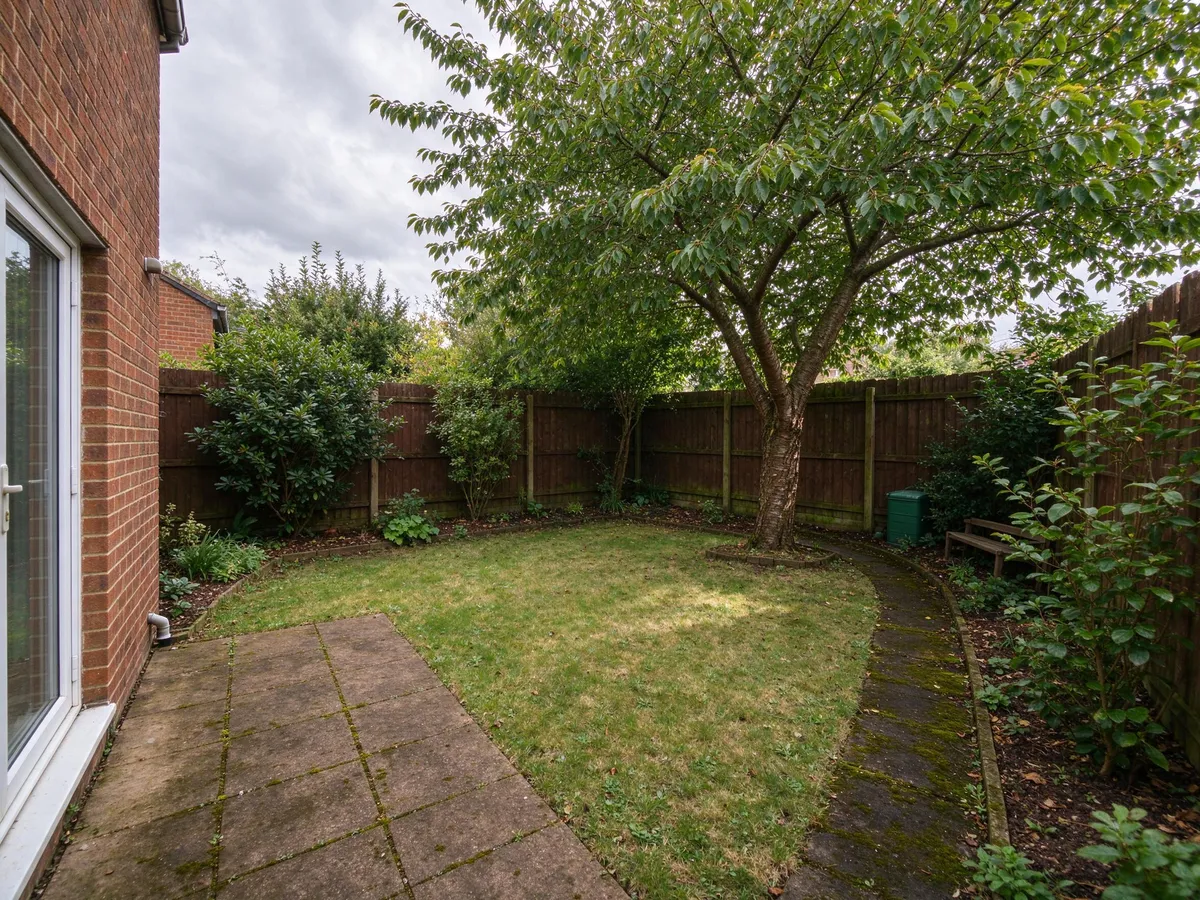
A planting-led alternative to lawn
Look at the new planted centre and curved route around the retained tree.
Plant mass, materials and layout all changed. This does not prove lower care, lower water use or measured access.
Both images are AI-generated editorial demonstrations, not a customer project or completed landscaping. Generated 2026-11-14. A case may be reused where it answers a different planning question.
The planting-led scene uses a curved route around a tree in another fictional space. It demonstrates a possible relationship between path and feature, not proof that your own garden needs a curve.
Reject a curve that solves no problem
Ask what would happen if you straightened it. Would you lose a useful view, cut through something important, or simply reach the destination more easily? Check the answer against the real space rather than accepting the AI's composition.
Do not infer width, turning room, slope or safe surfacing from either example. An invented path may narrow behind foliage or disconnect from the gate. Those are reasons to revise the concept, not to copy it physically.
Keep one reason with the chosen line
Write a short decision such as “a direct daily route with planting beside it” or “a walk around the retained tree.” Preview that direction. For a long thin space, narrow-garden layout also considers where the route leaves room for other activities.
Planning references
General context, not measured demand or proof of a generated example.
- RHS: planning a garden and preparing a briefGeneral planning context, not evidence of this fictional example or demand volume