Small spaces
How can you arrange a narrow garden without losing the route through it?
By GardenRender AI · Planning ideas and concept comparisons
Treat a narrow garden as a journey before treating it as a collection of features. Decide where you need to go, what you carry and where you might stop. Put planting or a seat beside that journey rather than asking the image to fit everything across it.
Name the two ends
A path to a shed is a different problem from a path to a quiet seat. List the start, destination and intermediate jobs: back door, bins, side gate, washing line or storage. Include an occasional bulky journey such as moving a bicycle.
Draw that journey on your own copy of the photo. This is only a reminder of the route, not a scaled drawing. If the far gate is hidden, use another photo to check its actual position rather than trusting an invented one.
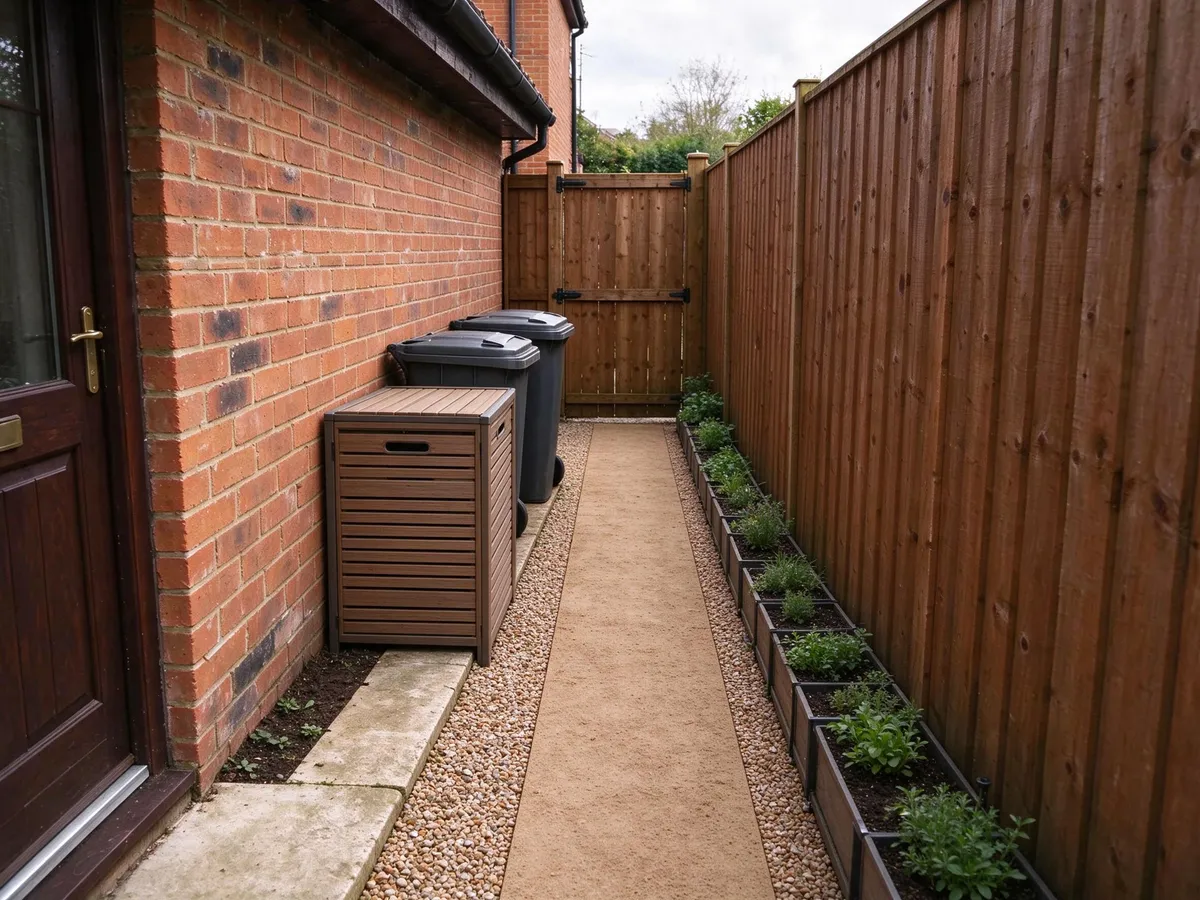
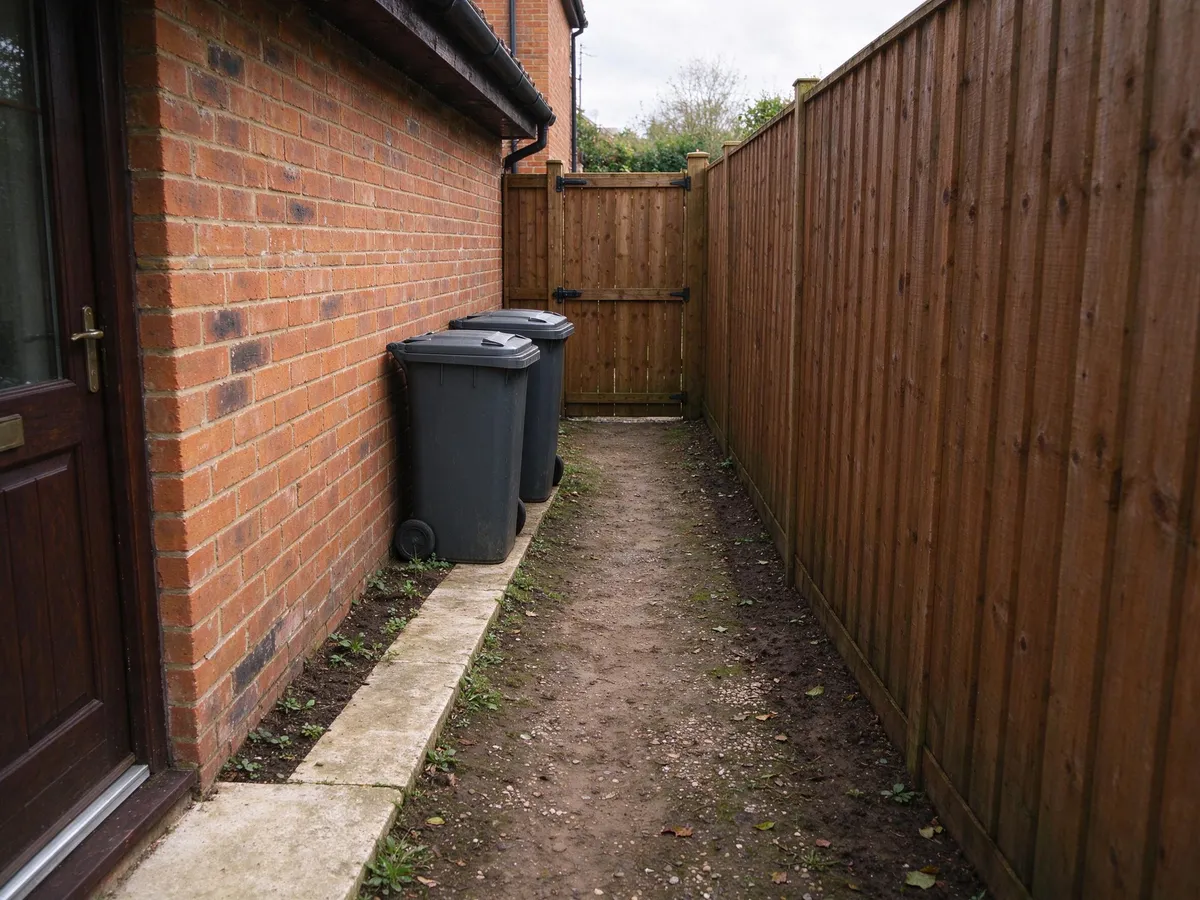
An everyday side passage
Follow the walking strip beside gravel and inspect the modest bin screen.
The change is small. Gate operation, bin access and usable width are not measured; no accessibility certification is implied.
Both images are AI-generated editorial demonstrations, not a customer project or completed landscaping. Generated 2026-11-14. A case may be reused where it answers a different planning question.
What this passage shows
The synthetic example has a brick wall on one side and a fence on the other. In the edited version, a continuous walking strip runs beside gravel, with a small bin screen. It remains a passage rather than becoming a dining terrace.
Look for the full connection between the door and gate. Some model changes are subtle, and the image does not prove the strip is wide, firm or level enough for your use. Its useful contribution is showing the difference between planting beside a route and planting across one.
Place a destination without blocking movement
If there is a wider point, consider whether a pause belongs there. A seat at the end can make the journey purposeful; a seat in the middle may turn every trip into a detour. Neither choice is automatically better.
Make a two-column note: “must pass here” and “could stop here.” Put a feature in only one column for the first concept. If it needs to serve both, explain how someone could use it while another person passes.
Test the inconvenient trip
Check the route with the things that matter in your household, not just with empty hands. Review gates, doors, protruding handles, pots and changes of level in the actual space. Any accessibility requirement needs its own measured assessment; the image is not a compliance check.
If storage is the main problem, the side-passage storage guide deals with bin lids, maintenance and retrieval rather than the overall route. For a new visual direction, use a photo showing both ends in the garden tool.
Planning references
General context, not measured demand or proof of a generated example.
- RHS: planning a garden and preparing a briefGeneral planning context, not evidence of this fictional example or demand volume