Planting and seasons
How can planting soften a bare fence without taking over the garden?
By GardenRender AI · Planning ideas and concept comparisons
Choose the part of the fence that dominates your everyday view, then explore a planted edge there. You do not have to conceal the whole boundary to change how the garden feels. Leaving some fence visible may be preferable to filling useful ground with planting.
Identify the view you actually dislike
Look from the seat, doorway or window you use most. Is the problem a long unbroken line, a bright surface, a bare corner or the lack of anything in front of it? These are different visual problems.
Circle the relevant section on a copy of your photo. Keep the original unchanged for comparison. If a boundary belongs to someone else or is damaged, resolve those questions separately from deciding how you would like it to look.
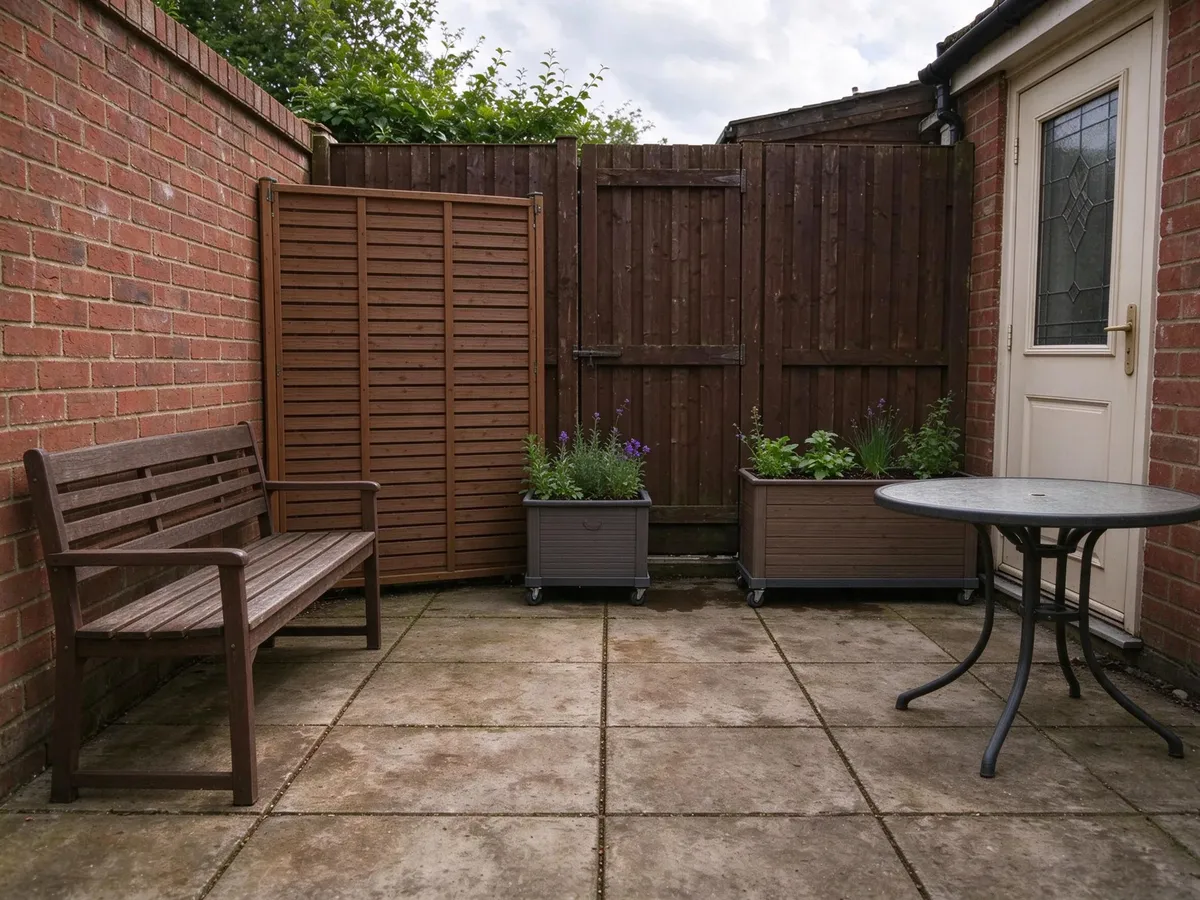
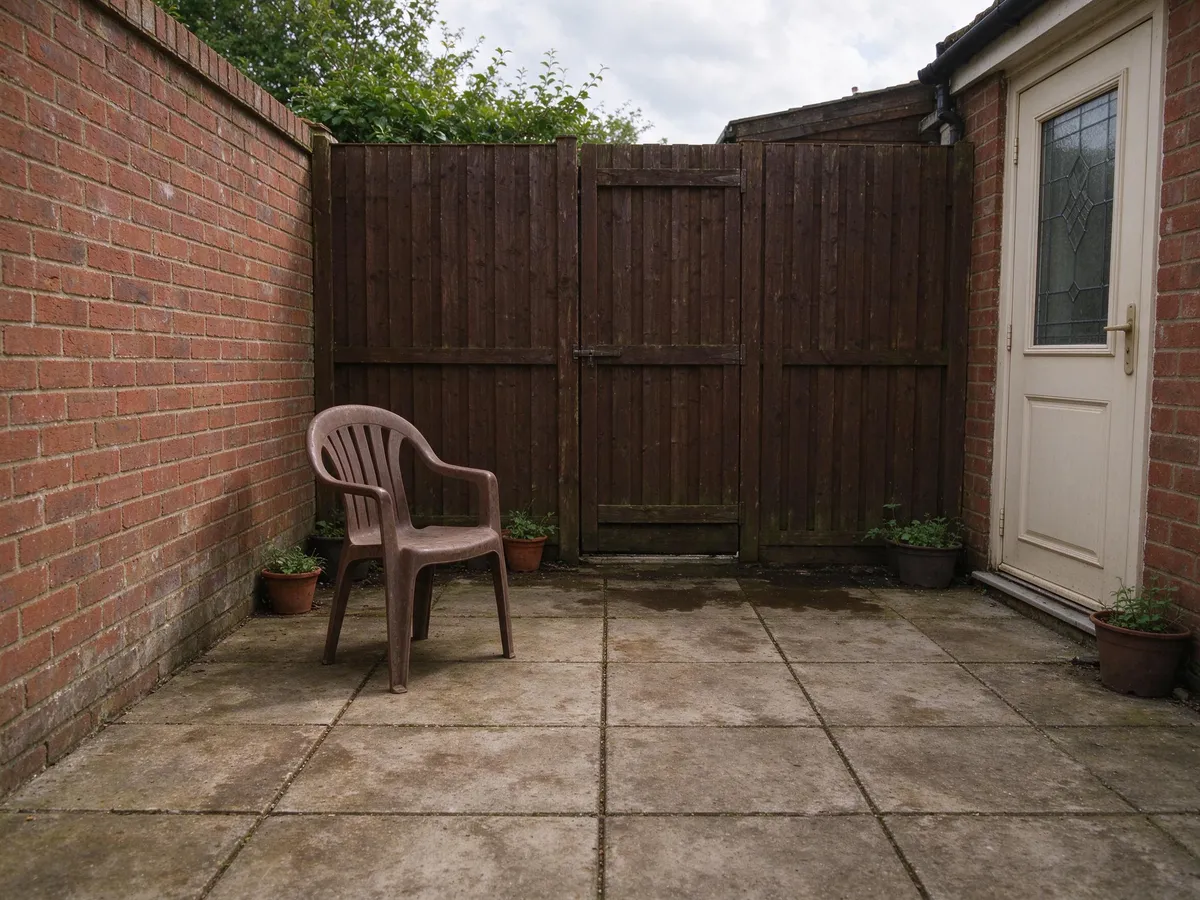
A genuinely small courtyard
Look at the bench against the wall, table and containers without losing the open centre.
The requested growing box is not clearly present. Furniture sizes, screen fixings and gate clearances are unverified.
Both images are AI-generated editorial demonstrations, not a customer project or completed landscaping. Generated 2026-11-14. A case may be reused where it answers a different planning question.
Notice the small changes
The synthetic courtyard result uses containers and a slatted panel rather than erasing the fence. The central paving remains part of the picture. This makes it useful for comparing a few interruptions along a bare edge with an attempt to hide everything.
It is not proof that the pictured plants will cover a fence, suit the location or survive there. The model also did not provide a planting plan. Treat the foliage as visual mass and texture, then investigate real plants for your conditions.
Choose an approach to investigate
| Visual aim | Possible direction | Separate question |
|---|---|---|
| Break a long line | A few grouped containers | Can they be cared for and moved? |
| Add depth | Planting in front of an edge | How much usable ground remains? |
| Reduce one exposed view | A local screen | What permissions and fixings are needed? |
These alternatives may be combined eventually, but comparing one at a time makes your preference easier to explain.
Keep access to the boundary
A planted edge can look complete while hiding access needed for cleaning, repairs or plant care. Walk the real edge and note places you need to reach. Do not attach supports or change a fence on the strength of an image.
The RHS low-maintenance guidance is a reminder that every added planting feature brings care decisions. A wall of pots is not automatically easier than a simple border.
Keep the useful fragment
Your next brief might be: “Soften the bare corner seen from the bench, but leave the centre open and the gate reachable.” Preview that change. For a whole-garden planting-versus-open-space decision, use lawn or larger borders instead.
Planning references
General context, not measured demand or proof of a generated example.
- RHS: low-maintenance gardeningCare questions and limits of low-maintenance labels