Planting and seasons
Should you keep more lawn or make the borders larger?
By GardenRender AI · Planning ideas and concept comparisons
Keep the open area you actually use, then decide whether more planting would improve the rest. The useful comparison is not “grass versus flowers” in the abstract. It is the space available for your activities versus the space you want to look after as planting.
Give the open area a job
Write down what happens on the lawn: sitting, informal play, crossing the garden or simply looking across it. A view can be a legitimate use, but distinguish it from a space people need to occupy.
Then note an unused edge. That is a more focused starting point than asking the model for a greener garden everywhere. Avoid deciding from a close-up of a border that conceals the remaining open ground.
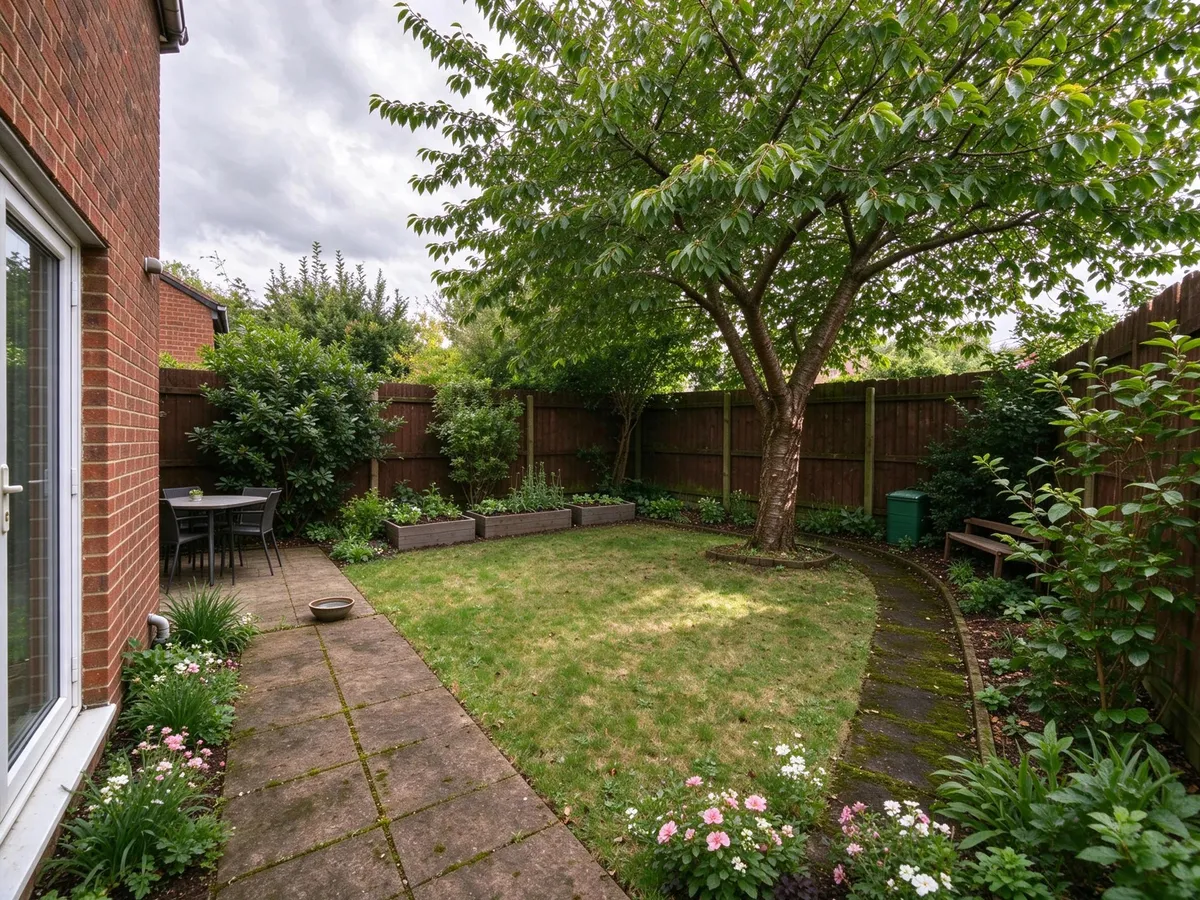
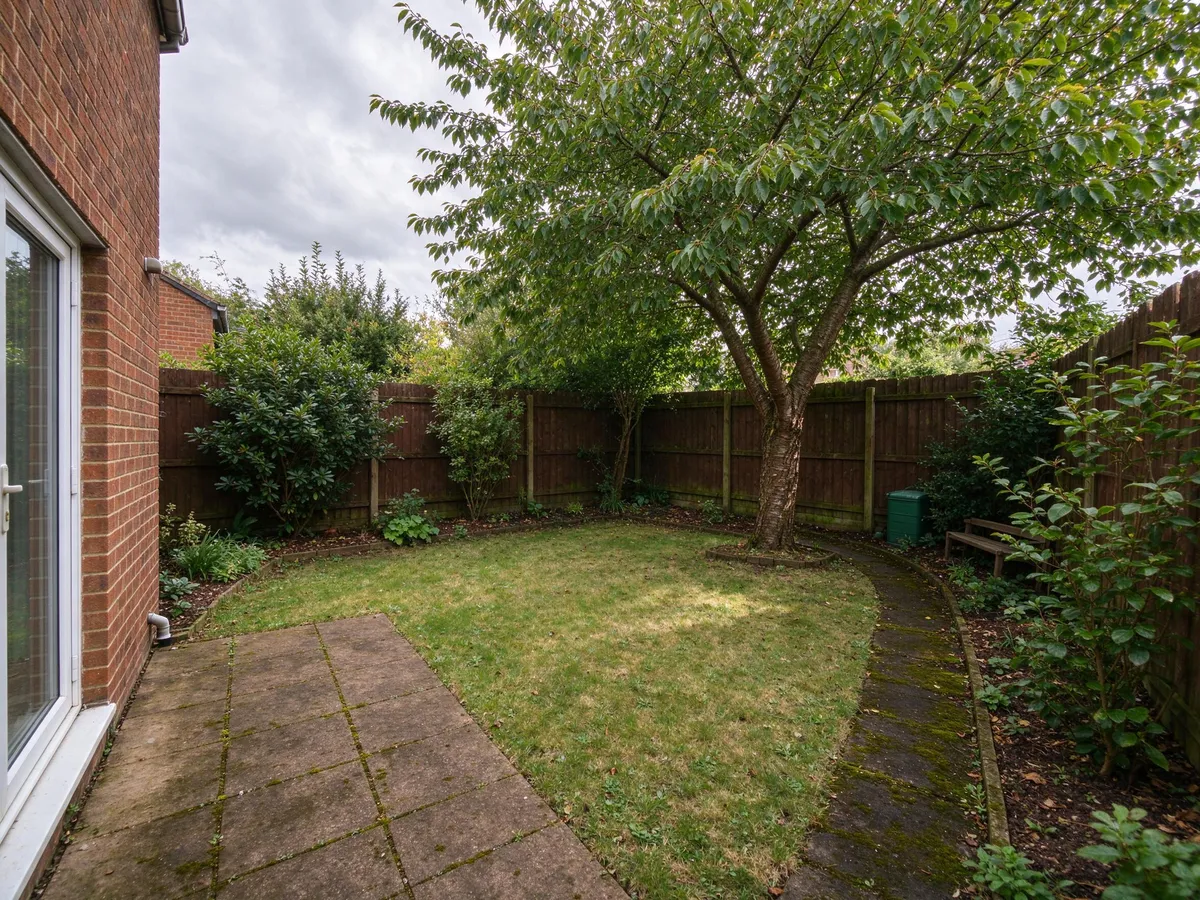
Open lawn with fuller edges
Compare the retained central lawn, mature tree and planted edges.
The original brief also asked for growing boxes and a water bowl, which are not clearly delivered here. Separate targeted examples are used for those topics.
Both images are AI-generated editorial demonstrations, not a customer project or completed landscaping. Generated 2026-11-14. A case may be reused where it answers a different planning question.
Compare two different commitments
The first synthetic edit keeps a central lawn and improves planted edges. The mature tree is a useful landmark. Ask what you gain from the new edge without treating its idealised flowers as a verified planting scheme.
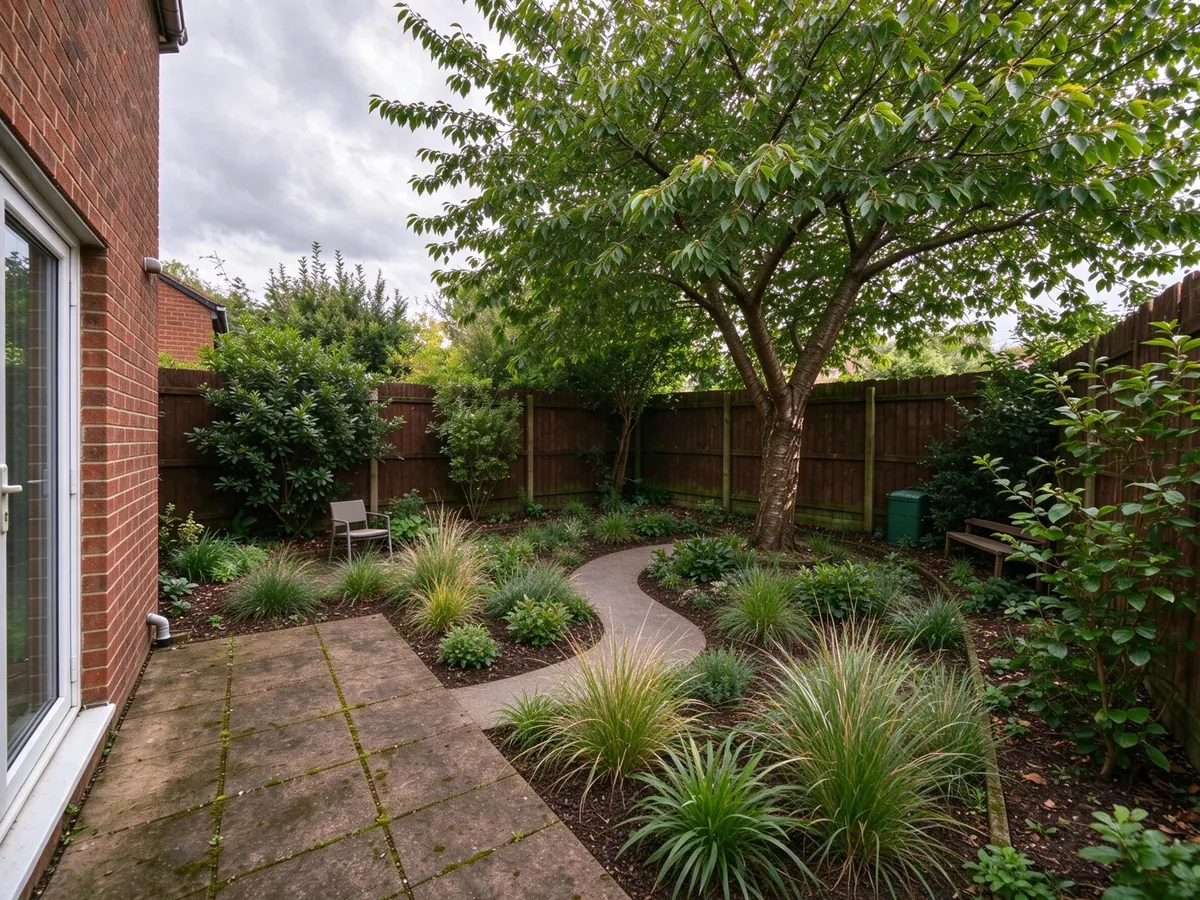
A planting-led alternative to lawn
Look at the new planted centre and curved route around the retained tree.
Plant mass, materials and layout all changed. This does not prove lower care, lower water use or measured access.
Both images are AI-generated editorial demonstrations, not a customer project or completed landscaping. Generated 2026-11-14. A case may be reused where it answers a different planning question.
The planting-led alternative replaces much more of the lawn and introduces a curved route. It demonstrates a substantially different use of the same scene. It also changes plant mass and surfaces, so it is not a controlled test of border width alone.
Make a keep-and-gain note
| Keep | Gain | What could be lost? |
|---|---|---|
| Space for a blanket | A planted edge to look at | A simple open rectangle |
| Direct movement | Texture along the route | Uninterrupted walking space |
| The established tree | More surrounding greenery | Access for care if filled too densely |
Replace these examples with your household's needs. If nobody can name a use for an area, observe it for a while before removing it.
Do not use appearance as an environmental score
The RHS lawn and mini-meadow guidance explains that an existing lawn can offer habitat opportunities without wholesale replacement. Our images do not identify species, predict wildlife benefit or compare water use. Those outcomes need real planting and management decisions.
Neither a large lawn nor a deep border is automatically low maintenance. List the chores you are willing to do, then investigate suitable plants and care separately.
Decide on the first comparison
Try two concepts from the same original photo: retain the activity area, then explore a planting-led alternative. If you are considering removing all the lawn, the no-lawn guide deals with the replacement surface and route rather than just the border edge.
Planning references
General context, not measured demand or proof of a generated example.
- RHS: low-maintenance gardeningCare questions and limits of low-maintenance labels
- RHS: lawn and mini-meadow habitatsLawn can be considered for habitat; outputs do not establish biodiversity