Planting and seasons
What could a garden without a lawn look like?
By GardenRender AI · Planning ideas and concept comparisons
A garden without grass does not have to become a single paved terrace. It can combine planting, a continuous route and somewhere to sit. Decide what replaces the lawn's jobs before choosing the look of the replacement.
List what the lawn currently does
It may provide an open view, a place to sit, a route between doors or a space for a household activity. Removing grass changes those uses as well as the appearance. Write down which must remain and which you are happy to give up.
Do not start by assuming grass removal will eliminate work. Different surfaces and planting bring different care tasks. A generated gravel texture does not establish drainage, surface construction or weed control.
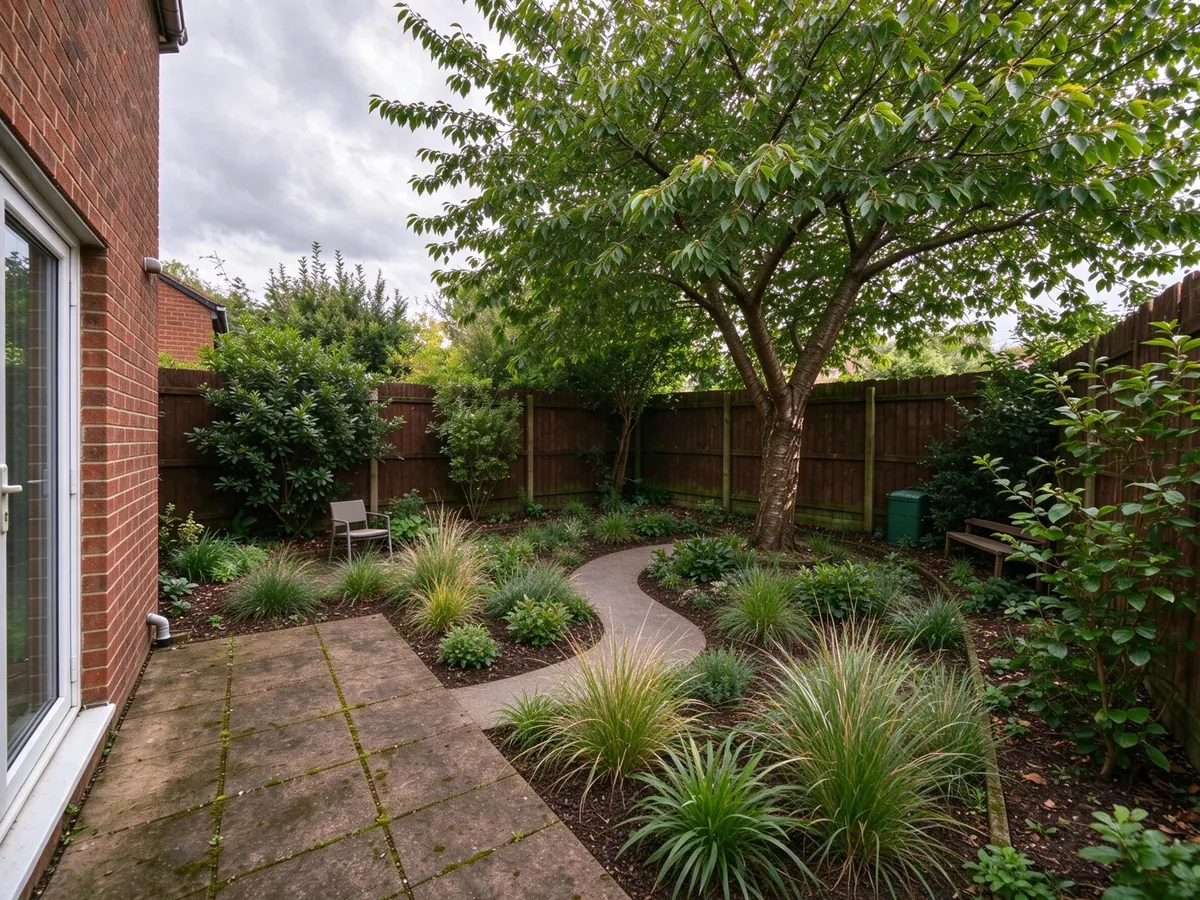
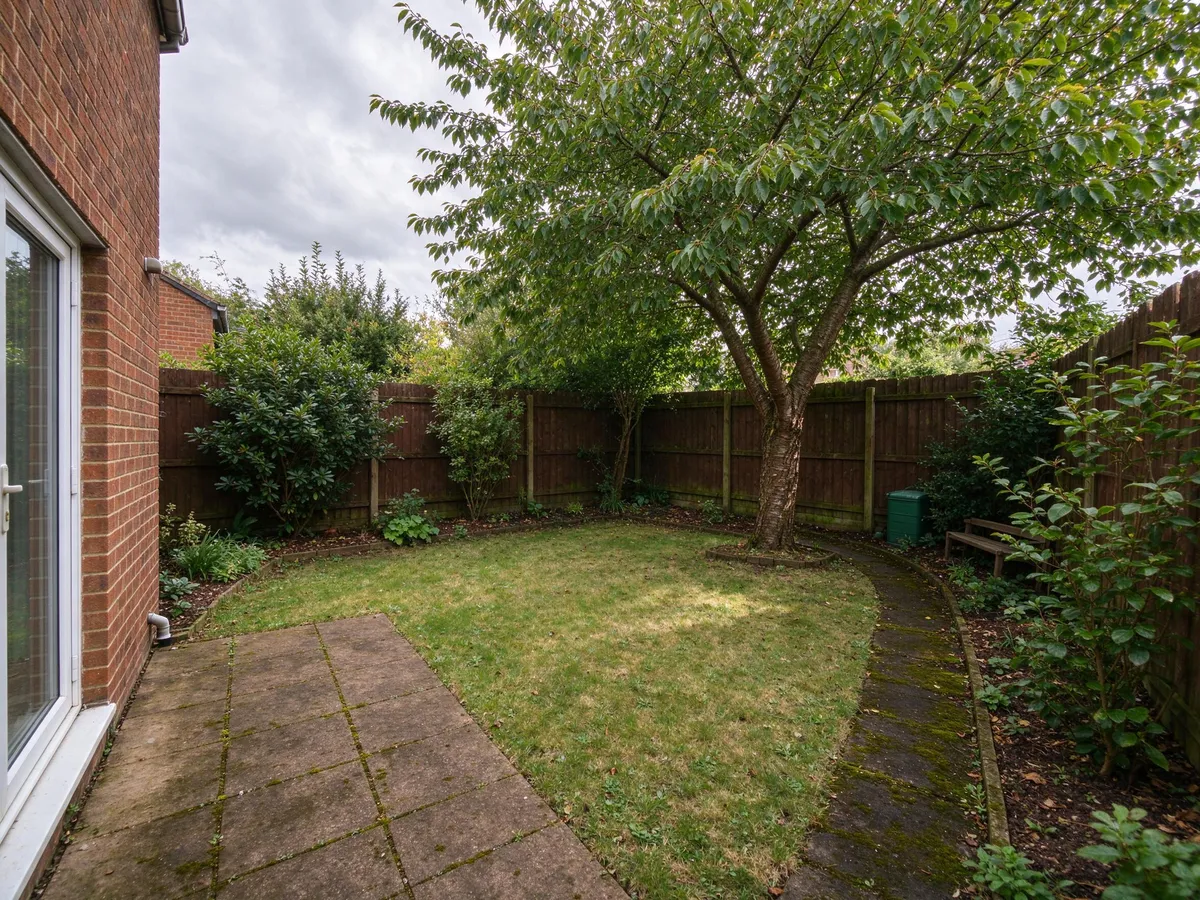
A planting-led alternative to lawn
Look at the new planted centre and curved route around the retained tree.
Plant mass, materials and layout all changed. This does not prove lower care, lower water use or measured access.
Both images are AI-generated editorial demonstrations, not a customer project or completed landscaping. Generated 2026-11-14. A case may be reused where it answers a different planning question.
Read the planting-led example
The fictional garden changes from a patchy central lawn to beds and a curved walking route. The mature tree and house help you recognise the starting scene. There is still open surface for moving through, but far less unoccupied central ground.
This is useful if you want to imagine walking among plants. It is less useful as evidence that a family activity will fit. The model did not measure usable area or identify the plants, and the attractive grasses do not establish local suitability.
Compare replacements by the job they do
| Replacement direction | Useful question |
|---|---|
| Mostly planting with a route | Where would you stop, sit and maintain the beds? |
| A larger sitting surface | Would you use the extra furniture space? |
| A mixture of smaller areas | Can you explain why each area is needed? |
You can explore these visually before buying materials. You still need actual site information before deciding which surfaces or planting are appropriate.
Keep the route test separate
Trace every journey through the garden. Check the real location of steps, gates, drains and service access. Loose material pictured around a solid path does not prove the whole route is suitable for wheeled access or every household member.
The RHS low-maintenance advice is helpful background when comparing care demands. It does not certify any AI concept as easy to maintain. For wildlife aims, consider local guidance rather than assuming more green pixels means better habitat.
Try an alternative you can describe
A useful brief is: “Replace the central lawn with planting, but keep an obvious route and a small seat near the house.” Explore that direction, then keep a list of activities the result no longer accommodates. If you only want a little more planting, start with lawn versus larger borders instead.
Planning references
General context, not measured demand or proof of a generated example.
- RHS: low-maintenance gardeningCare questions and limits of low-maintenance labels